How to Start Food Dehydrator Business from Home
Suppliers Admin October 12, 2026
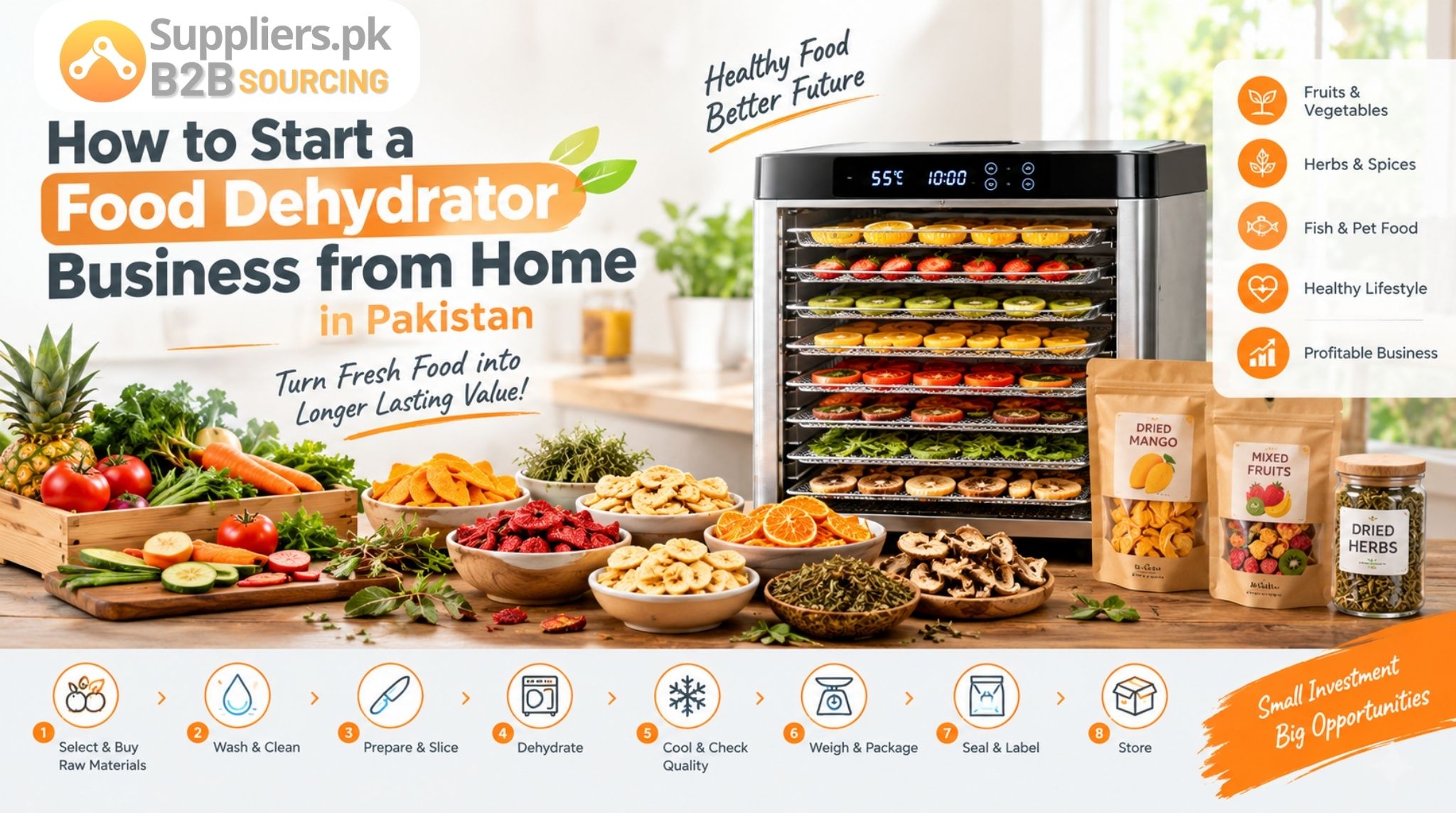
ABOUT THE FOOD DEHYDRATOR BUSINESS:
A food dehydrator business is a simple home-based food processing opportunity in which fresh fruits, vegetables, herbs, and other suitable food items are dried by removing their moisture. This process helps extend shelf life while creating convenient, ready-to-use products.
From dried mangoes and bananas to vegetables, herbs, spices, and fruit snacks, dehydrated foods can be sold to grocery stores, supermarkets, restaurants, bakeries, health-food stores, and direct customers.
The business can be started on a small scale from home and expanded gradually as demand increases. With proper hygiene, attractive packaging, consistent quality, and reliable sourcing, a home-based dehydrated food business can become a profitable small venture.
ABOUT MACHINERY:
The main equipment required depends on the products you plan to manufacture and the scale of your business
ESSENTIAL MACHINERY AND EQUIPMENT:
1. FOOD DEHYDRATOR:
The dehydrator is the main machine used to remove moisture from food at controlled temperatures. Different capacities are available, from small household units to commercial machines with multiple trays.
2. FOOD SLICER/CUTTER:
A slicer helps produce uniform pieces, allowing food to dry more evenly and giving the finished product a professional appearance.
3. STAINLESS STEEL PREPARATION TABLES:
A clean, food-grade preparation area is important for washing, cutting, sorting, and handling raw materials.
4. WEIGHING SCALE
A digital weighing scale is required for accurately measuring both raw materials and finished products.
5. HEAT SEALER
A heat-sealing machine is used to seal food pouches properly and protect the product from moisture and contamination.
6. STORAGE CONTAINERS/RACKS:
Food-grade containers and storage racks help keep raw materials and finished products organized and protected.
For a small home setup, you can begin with a good-quality dehydrator, slicer, weighing scale, heat sealer, and basic food-processing equipment instead of investing heavily in machinery from day one.
ABOUT RAW MATERIALS:
The main raw materials depend on the type of dehydrated products you want to sell.
Possible products include:
Mango
Banana
Apple
Pineapple
Strawberry
Lemon and orange slices
Tomatoes
Carrots
Okra
Chillies
Garlic
Ginger
Mint and other herbs
Mushrooms
Mixed vegetable packs
You may also require ingredients such as salt, sugar, spices, lemon juice, or approved food-grade preservatives depending on the product formulation.
Always purchase fresh, good-quality raw materials. Since the quality of the final dehydrated product largely depends on the quality of the fresh ingredients, sourcing should be treated as an important part of the business.
ABOUT PACKAGING:
Packaging is not only about appearance; it plays an important role in protecting dehydrated food from moisture, air, contamination, and loss of quality.
Suitable packaging options include:
Stand-up pouches
Zip-lock food pouches
Vacuum-sealed bags
Food-grade plastic containers
Glass jars for premium products
For retail sales, use attractive branded packaging with a clear product name, net weight, ingredients, manufacturing date, expiry/best-before information, storage instructions, and other legally required labeling details.
A moisture-resistant and properly sealed package can help maintain the texture and quality of dehydrated products for longer.
ABOUT FOOD DEHYDRATOR BUSINESS PROCESS:
The basic production process is straightforward:
STEP 1: SELECT AND PURCHASE RAW MATERIALS
Purchase fresh fruits, vegetables, herbs, or other ingredients from reliable suppliers.
STEP 2: WASH AND CLEAN
Thoroughly wash the raw materials to remove dirt and impurities.
STEP 3: SORT AND PREPARE
Remove damaged portions and prepare the food by peeling, trimming, slicing, or cutting it into suitable pieces.
STEP 4: PRE-TREATMENT
Some foods may require pre-treatment, such as blanching or using an appropriate food-safe treatment, to maintain quality, color, or texture.
STEP 5: DEHYDRATION
Arrange the prepared food in the dehydrator trays without overcrowding them. Set the appropriate temperature and drying time according to the specific food product.
STEP 6: COOLING AND QUALITY CHECK
Once dehydration is complete, allow the product to cool properly and check its texture, appearance, smell, and overall quality.
STEP 7: WEIGHING AND PACKAGING
Weigh the finished product according to your selected pack size and place it in clean, food-grade packaging.
STEP 8: SEALING AND LABELING
Seal the packaging properly and add the required product information.
STEP 9: STORAGE
Store finished products in a cool, dry place away from direct sunlight and moisture.
ABOUT INVESTMENT :
The initial investment depends on the capacity of the dehydrator, type of products, packaging quality, and whether you operate from an existing home kitchen or set up a dedicated workspace.
A small-scale setup may require investment in:
Food dehydrator
Food slicer
Digital weighing scale
Heat sealer
Stainless-steel utensils and preparation equipment
Food-grade storage containers
Initial stock of fruits and vegetables
Packaging material
Labels and branding
Cleaning and hygiene supplies
Instead of purchasing expensive machinery immediately, beginners can start with a small-capacity dehydrator and test a few products in the market. Once regular customers and repeat orders are established, production capacity can be increased.
ABOUT RUNNING COST:
The running cost of a food dehydration business depends mainly on raw materials, electricity, packaging, labour, transportation, wastage, and marketing.
Your total product cost should include:
Raw Material Cost + Processing/Electricity Cost + Packaging Cost + Labour + Transportation + Wastage + Other Overheads = TOTAL PRODUCT COST
Raw materials can be one of the biggest expenses. Remember that fresh fruits and vegetables lose a significant amount of weight during dehydration because moisture is removed. Therefore, costing should be calculated based on the quantity of fresh raw material required to produce the final saleable quantity.
Other regular expenses may include:
Electricity
Water and cleaning supplies
Packaging
Labels and printing
Delivery charges
Marketing and advertising
Equipment maintenance
Storage
Product testing and quality control
Marketplace or payment fees
Keeping accurate records of every expense will help you determine your actual production cost and set profitable selling prices.
ABOUT PROFIT POTENTIAL:
The profit potential of a food dehydrator business depends on product selection, raw material prices, production efficiency, packaging, selling price, and sales volume.
Products such as dried fruits, vegetable mixes, herbs, spices, and healthy snack packs can be positioned as convenient or premium products, allowing better margins when quality and packaging are strong.
For example, if your total cost of producing one packet is Rs. 150 and you sell it for Rs. 300, the gross contribution is Rs. 150 per packet before other business expenses.
Profit can increase as production volume grows and wastage is reduced. Direct-to-customer sales through social media and online platforms may provide better margins than wholesale sales, while supplying retailers, supermarkets, bakeries, and restaurants can help generate larger and more regular orders.The key to profitability is to control raw material costs, minimize wastage, maintain consistent quality, use efficient dehydration methods, and price the products according to the complete production cost rather than only the cost of fresh ingredients
Written by Dr. Fatima
#FoodDehydratorBusiness #FoodDehydration #HomeBasedBusiness #SmallBusinessPakistan #BusinessIdeasPakistan #FoodProcessing #FoodProcessingBusiness #DriedFruits #DriedVegetables #HealthySnacks #Entrepreneurship #StartupPakistan #ManufacturingPakistan #BusinessOpportunities #HomeBusinessIdeas #SmallInvestmentBusiness #FoodPackaging #RawMaterialSourcing #SuppliersPk #SuppliersPkOfficial #B2BSourcing #BusinessDirectory #AdListing #TrustedSuppliers