How to Start a Frozen Food Business from Home
Suppliers Admin October 27, 2026
1. ABOUT THE BUSINESS:
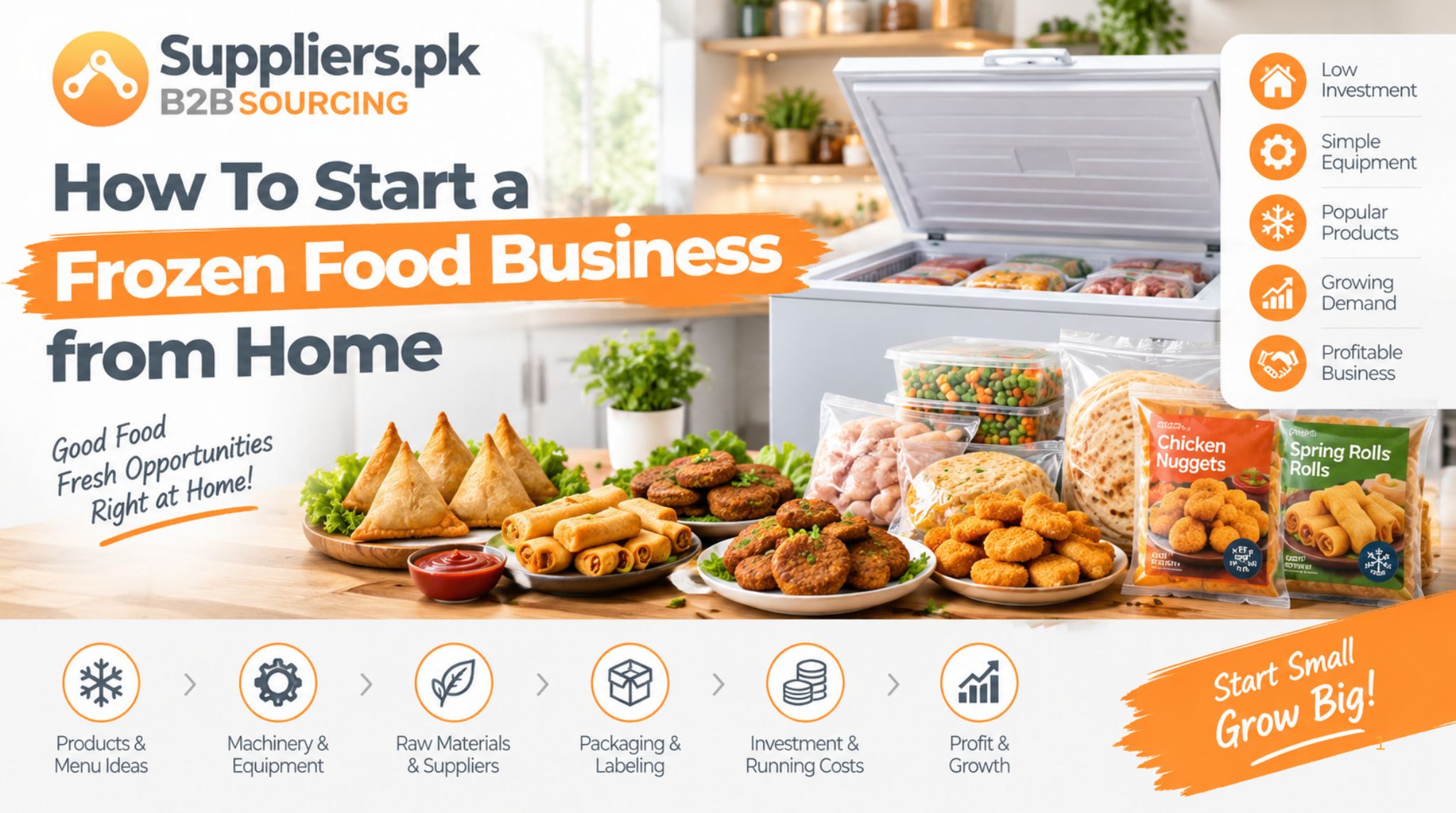
Starting a frozen food business from home in Pakistan is a promising opportunity for people who want to earn money with a relatively small investment. Frozen food products are popular among busy families, students, working professionals, and restaurants. You can start by preparing samosas, spring rolls, shami kebabs, chicken nuggets, parathas, seekh kebabs, and other ready-to-cook products. Initially, focus on three to five products and expand your menu according to customer demand. You can sell through WhatsApp, Facebook, Instagram, and local grocery stores.
2. ABOUT MACHINERY:
You do not need expensive industrial machinery to start a small home-based business. Basic equipment can help you prepare, preserve, and package products efficiently.
Essential equipment includes:
Deep freezer for storing frozen products.
Refrigerator for keeping raw ingredients fresh.
Digital weighing scale for accurate measurements.
Heat sealing machine for packaging.
Food processor or grinder for preparing mixtures.
Stainless steel utensils, knives, chopping boards, and mixing bowls.
Initially, use your existing kitchen equipment wherever possible to reduce investment. Purchase additional machinery as your business grows.
3. ABOUT RAW MATERIALS:
Raw materials depend on the products you manufacture. For example, samosas require flour, potatoes, peas, spices, and oil, while chicken rolls and nuggets require chicken, breadcrumbs, flour, and seasonings.
Purchase fresh ingredients from reliable wholesalers to maintain quality and control costs. Buy ingredients in appropriate quantities to avoid unnecessary waste. Check the quality and expiry dates of packaged ingredients before purchasing them.
Maintaining consistent taste and quality is essential for building customer trust and encouraging repeat orders.
4. ABOUT PACKAGING:
Proper packaging protects frozen food from contamination, moisture, freezer burn, and unpleasant odours. Use food-grade, freezer-safe plastic bags or suitable airtight containers. A heat sealing machine can help keep packages securely closed.
Each package should include the product name, ingredients, manufacturing date, expiry or best-before date, storage instructions, cooking instructions, and business contact details. Include allergen information where applicable.
Attractive, professional packaging can improve your brand image and help your products stand out in the market. Check applicable food labelling and licensing requirements before selling commercially.
5. ABOUT THE PROCESS:
First, purchase fresh raw materials and inspect their quality. Clean and prepare the ingredients using hygienic food-handling practices. Prepare the mixtures, shape the products, and portion them according to your standard recipe.
Freeze the products promptly using appropriate freezing equipment. Once adequately frozen, pack and seal them in clean, food-grade packaging. Label each batch and store it at a consistently safe frozen temperature, generally around -18°C.
Maintain cleanliness throughout preparation, packaging, and storage. Keep raw and ready-to-eat foods separate, and follow safe handling practices to prevent contamination. Establish a suitable shelf life based on product testing and food safety guidance rather than guessing expiry dates.
6. ABOUT INVESTMENT:
The initial investment depends on your product range, equipment requirements, and production capacity.
An estimated budget for a small home-based business is:
Deep freezer: PKR 50,000–100,000.
Sealing machine and weighing scale: PKR 10,000–25,000.
Kitchen utensils and equipment: PKR 10,000–25,000.
Initial raw materials: PKR 15,000–30,000.
Packaging and labels: PKR 5,000–15,000.
Marketing and miscellaneous expenses: PKR 5,000–15,000.
A practical starting budget may be approximately PKR 100,000–210,000 if you already have a suitable kitchen and refrigerator. Costs vary by city, equipment quality, and supplier. You should also budget for any applicable registration and licensing expenses.
7. ABOUT RUNNING COST:
Monthly running costs include raw materials, packaging, electricity, delivery, marketing, cleaning supplies, and equipment maintenance.
For a small home-based operation, monthly expenses might range from PKR 50,000 to PKR 150,000, depending on production volume and sales. Delivery charges and electricity consumption can significantly affect operating costs.
Prepare a cost sheet for every product. Include ingredients, packaging, electricity, labour, delivery, and wastage. This helps you set prices that cover expenses while remaining competitive.
Keep personal and business expenses separate, and record daily sales, purchases, and payments to understand your actual financial performance.
8. ABOUT PROFIT:
Profit depends on selling prices, production costs, customer demand, and sales volume. For example, if a packet costs PKR 300 to produce, including packaging, and sells for PKR 450, the gross profit is PKR 150 per packet.
However, delivery, marketing, electricity, wastage, and other operating expenses must also be considered before calculating net profit.
Some businesses may achieve a gross margin of 20–35%, but this is not guaranteed. Start with small batches, collect customer feedback, and focus on products that sell consistently.
Promote your products through social media, offer introductory deals, and encourage repeat orders. As demand grows, you can expand production, supply local stores, and develop your own frozen food brand.
Written by: Dr. Fatima
Are looking for Suppliers?
If you are planning to start a frozen food business from home and need reliable suppliers for raw ingredients, commercial food processors, deep freezers, vacuum sealers, or food-grade frozen packaging solutions, visit Suppliers.pk to find trusted suppliers or get in touch with us directly!
Contact Us:
- 🌐 Website: www.suppliers.pk
- 📧 Email: info@suppliers.pk
- 📞 WhatsApp / Phone: +92 300-8270451
- 📍 Location: Karachi, Pakistan
#frozenfoodbusiness #foodprocessing #frozenfoods #homebasedbusiness #smallscaleindustry #pakistanfoodindustry #vacuumsealing #foodpackaging #startupbusiness #homebusinessideas #supplierspk #b2bsourcing #madeinpakistan #b2bmarketplace #pakistanbusiness #scspakistan #suppliernetwork #wholesale #digitalpakistan #businessgrowth