How to Start an LED Bulb Manufacturing Business from Home in Pakistan
Marketing November 11, 2026
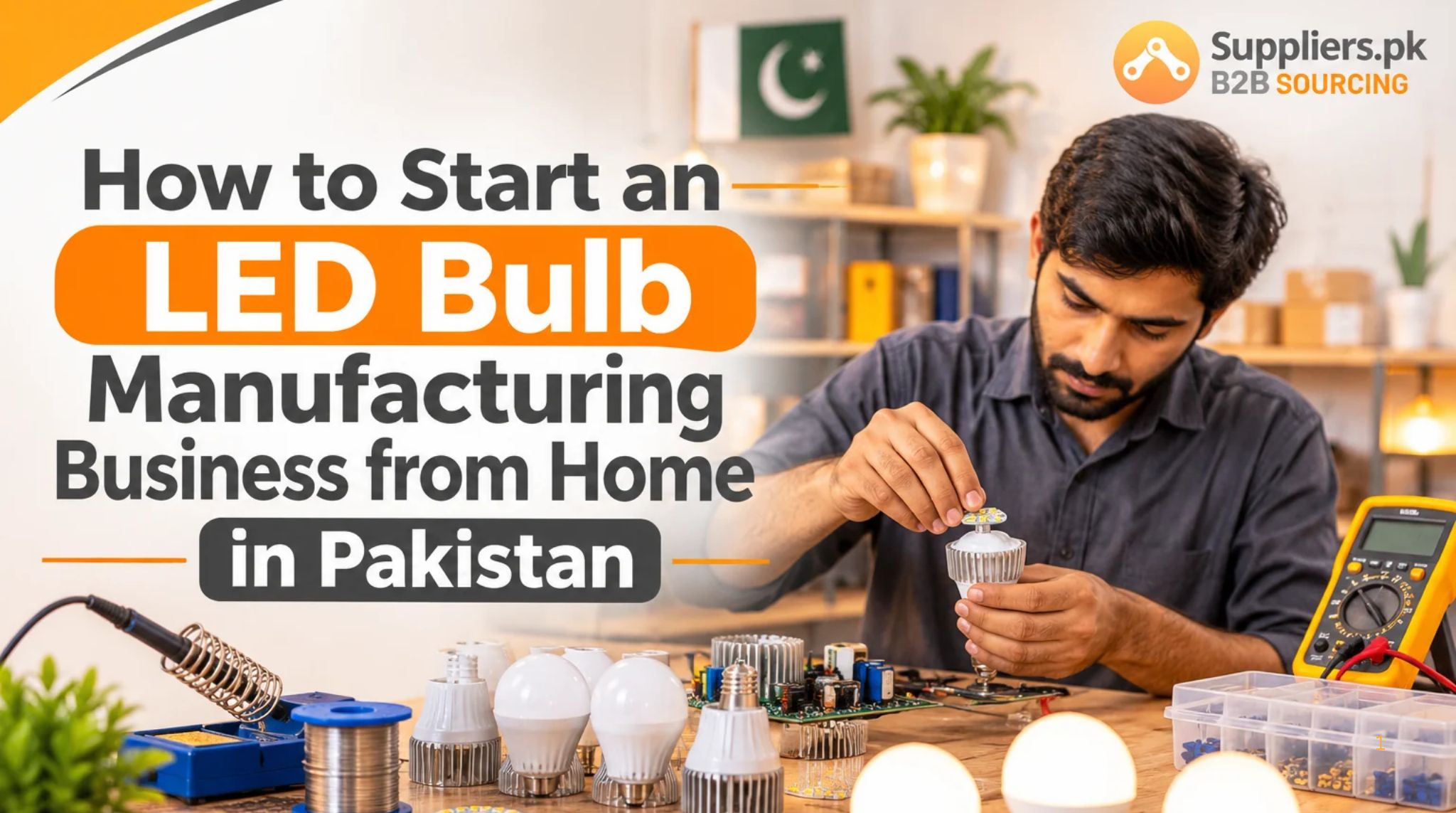
Starting an LED bulb manufacturing business from home can be a promising small-scale business opportunity in Pakistan. With increasing electricity costs and growing demand for energy-efficient lighting, LED bulbs are widely used in homes, offices, shops, schools, factories, and commercial buildings.
The business can be started on a small scale with basic assembly equipment and gradually expanded as demand increases. Entrepreneurs can manufacture standard LED bulbs, decorative bulbs, emergency bulbs, and customized lighting products depending on their target market.
ABOUT BUSINESS
An LED bulb manufacturing business involves assembling the different components of an LED bulb, testing the finished product, and packaging it for sale.
For a home-based setup, you do not necessarily need to manufacture every component yourself. Many components can be purchased from local or international suppliers and assembled locally.
Common products include:
* Standard LED bulbs
* Energy-saving LED bulbs
* Decorative LED bulbs
* Emergency LED bulbs
* Rechargeable LED bulbs
* Different wattage bulbs
* Customized LED lighting products
A small business can initially focus on a few popular wattages, such as 7W, 9W, 12W, and 15W, before expanding its product range.
ABOUT MACHINERY
The machinery required depends on whether you are assembling LED bulbs or manufacturing components from scratch.
For a small home-based assembly setup, basic equipment may include:
* LED bulb assembly tools
* Soldering stations
* Soldering irons
* Digital multimeter
* LED testing equipment
* Power supply/testing unit
* Screwdrivers and hand tools
* Wire cutters and strippers
* Heat gun
* Small drilling equipment
* Bulb testing board
* Packaging and sealing equipment
For larger-scale production, businesses may invest in:
* Automatic LED assembly machines
* PCB assembly equipment
* LED testing machines
* Automatic soldering equipment
* Aging/testing equipment
* Injection molding machines for plastic components
For beginners, purchasing expensive industrial machinery is usually unnecessary. A small assembly operation can be used to test the market before investing in advanced equipment.
ABOUT RAW MATERIALS
The quality of an LED bulb depends heavily on the quality of its components.
Common raw materials and components include:
* LED chips
* LED PCB
* Driver circuit
* Capacitors
* Resistors
* Diodes
* Heat sink
* Plastic or aluminum bulb body
* Diffuser
* B22 or E27 bulb holder/cap
* Connecting wires
* Solder
* Thermal paste
* Insulation materials
Different wattages require different specifications and component combinations.
Raw materials can be sourced from local electronics markets or imported from countries such as China, depending on price, quality, and availability.
It is important to test suppliers carefully because low-quality components can lead to overheating, flickering, short product life, or complete failure of the bulb.
ABOUT PACKAGING
Packaging plays an important role in the LED bulb business because customers often compare products based on appearance, specifications, warranty, and brand presentation.
Packaging may include:
* Individual cardboard boxes
* Printed cartons
* Plastic packaging
* Product labels
* Barcode stickers
* Warranty cards
* Instruction labels
* Bulk cartons for wholesale customers
The packaging should clearly mention important information such as:
* Brand name
* Wattage
* Voltage
* Product type
* Color temperature
* Energy-efficiency information
* Net quantity
* Manufacturing information
* Warranty information, where applicable
Professional packaging can make a small local brand look more trustworthy and help it compete with established brands.
ABOUT PROCESS
The LED bulb manufacturing process for a small-scale assembly business generally involves several stages.
1. COMPONENT PREPARATION
All required components are inspected and prepared before assembly.
2. PCB ASSEMBLY
The LED components and electronic parts are assembled onto the PCB according to the selected bulb design.
3. DRIVER ASSEMBLY
The driver circuit is assembled and connected to the LED board. The driver regulates the electrical supply to the LEDs.
4. HEAT MANAGEMENT
The LED board is connected to an appropriate heat-dissipation system. Proper thermal management is essential because excessive heat can significantly reduce the life of an LED bulb.
5. BULB BODY ASSEMBLY
The PCB, driver, heat sink, diffuser, and bulb housing are assembled together.
6. ELECTRICAL TESTING
Each finished bulb should be tested for:
* Voltage
* Power consumption
* Light output
* Flickering
* Heating
* Electrical safety
* Overall performance
7. QUALITY CONTROL
Defective or poorly assembled bulbs should be separated before packaging.
8. PACKAGING
After passing quality checks, the finished bulbs are packed, labeled, and prepared for sale.
Safety note: Electrical assembly and testing should be carried out by trained personnel using appropriate safety equipment and procedures.
ABOUT INVESTMENT
The investment required depends on the scale of the business, the quality of components, the number of bulbs produced, and whether the entrepreneur purchases manual or automated machinery.
A small home-based setup generally requires investment in:
* Assembly tools
* Testing equipment
* Initial raw materials
* Bulb housings
* LED PCBs
* Drivers
* Packaging
* Branding and labels
* Electricity and workspace
* Product testing and quality control
Starting with a small inventory can help reduce financial risk. Instead of purchasing thousands of components initially, a new entrepreneur can begin with a limited quantity, test the products in the market, and then increase production.
ABOUT RUNNING COST
The main running costs of an LED bulb business include:
* Raw materials
* Electricity
* Packaging
* Labor
* Transportation
* Machinery maintenance
* Product testing
* Marketing
* Delivery costs
* Rent, if a separate workspace is used
* Rejected or defective products
Raw material prices can fluctuate, particularly when components are imported. Therefore, maintaining multiple suppliers and regularly reviewing production costs can help the business remain competitive.
ABOUT PROFIT
Profitability depends on production volume, component costs, selling price, product quality, and whether the business sells directly to customers or through wholesalers.
For example, if the total cost of producing and packaging one LED bulb is Rs. 180 and the bulb is sold for Rs. 300, the gross difference is:
Rs. 300 − Rs. 180 = Rs. 120 per bulb
However, this is not necessarily the final net profit because expenses such as transportation, marketing, electricity, labor, defective units, retailer margins, and other operating costs must also be considered.
A business selling directly to customers can potentially achieve higher margins, while wholesale distribution can provide lower margins per unit but significantly higher sales volume.
The key to making the LED bulb business profitable is to maintain consistent quality, control component costs, reduce defective products, build a reliable brand, and develop strong wholesale and retail distribution channels.
Written by: Dr. Fatima
Looking for LED Components & Manufacturing Suppliers?
Agar aap LED bulb manufacturing business start karna chahte hain aur high-quality LED drivers, MCPCBs, aluminum housings, capping machines, ya custom packaging boxes ke liye reliable suppliers dhondna chahte hain, toh Suppliers.pk par visit karein ya hum se direct rabta karein!
Contact Us:
- 🌐 Website: www.suppliers.pk
- 📧 Email: info@suppliers.pk
- 📞 WhatsApp / Phone: +92 300-8270451
- 📍 Location: Karachi, Pakistan
#ledbulbbusiness #homebusinessideas #electricalbusiness #smallscaleindustry #pakistanbusiness #manufacturingstartup #ledlighting #businessideas #electricequipment #startupguide
#suppliers #supplierspk #b2bsourcing #madeinpakistan #b2bmarketplace #pakistanbusiness #scspakistan #suppliernetwork #wholesale #digitalpakistan #businessgrowth