How to Start a USB Cable Manufacturing Business from Home in Pakistan
Marketing November 25, 2026
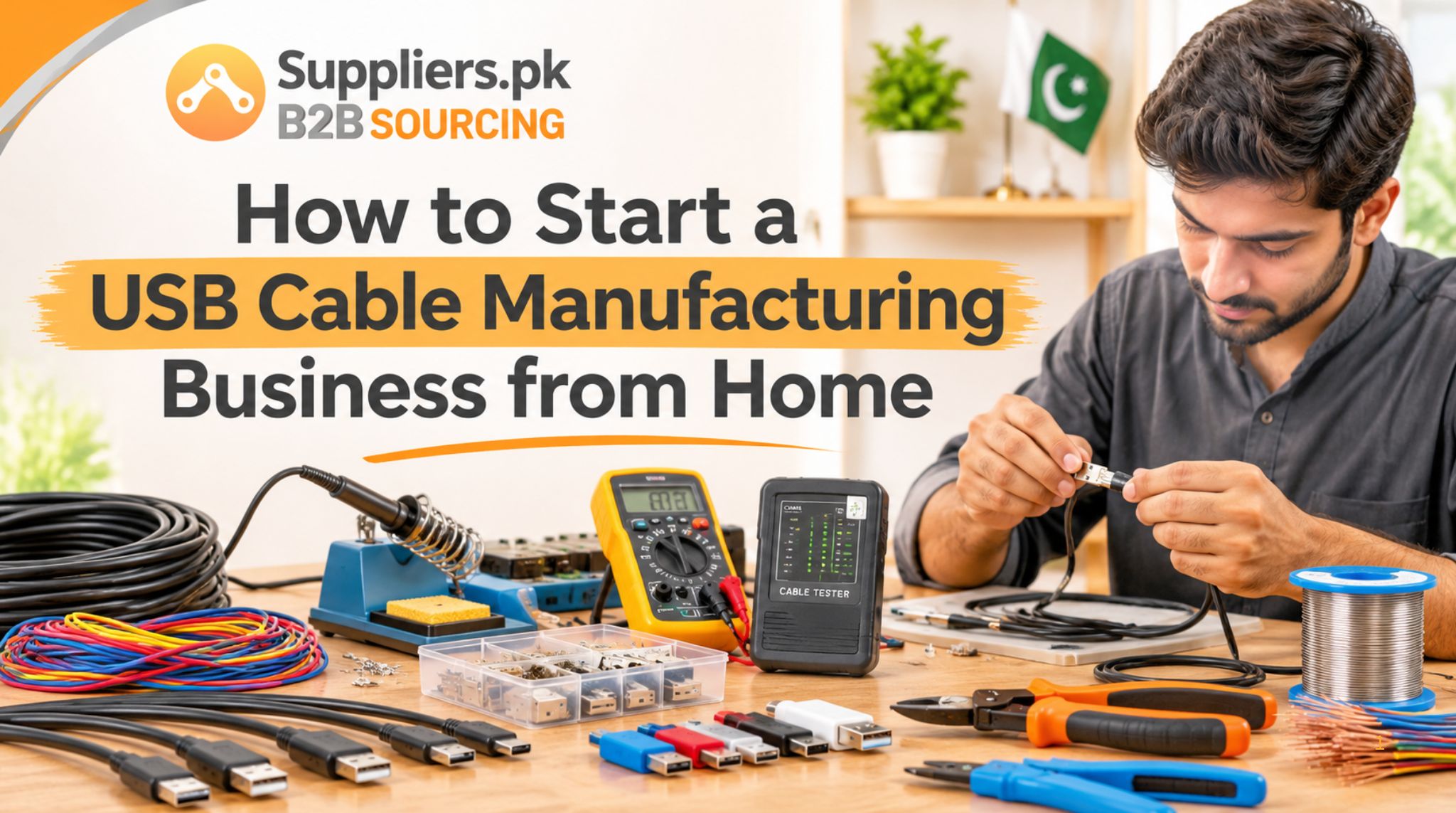
ABOUT THE USB CABLE MANUFACTURING BUSINESS:
A USB cable manufacturing business is a small-scale electronics assembly opportunity that can be started from home with a manageable investment. USB cables are widely used for charging and data transfer with smartphones, tablets, power banks, laptops, cameras, speakers, and other electronic devices.
The business involves sourcing suitable cables, connectors, wires, insulation materials, and other components, followed by cutting, assembling, soldering, testing, and packaging the finished products.
You can manufacture different types of cables depending on market demand, such as USB-A to USB-C, USB-A to Micro-USB, USB-C to USB-C, charging cables, data cables, and other customized cable products.
A home-based setup can begin with small production quantities and gradually expand as you develop regular customers and improve your manufacturing process.
ABOUT MACHINERY:
The machinery and tools required depend on the type of USB cables you plan to manufacture and your expected production volume.
ESSENTIAL MACHINERY AND EQUIPMENT:
1. CABLE CUTTING MACHINE:
A cable cutting machine is used to cut wires and cable material into consistent lengths. For very small production, manual cutting tools can also be used.
2. WIRE STRIPPING MACHINE:
A wire stripping machine removes the outer insulation from the cable ends without damaging the internal conductors.
3. SOLDERING STATION:
A temperature-controlled soldering station is required to connect wires to USB connectors securely and accurately.
4. USB CONNECTOR ASSEMBLY TOOLS:
Crimping tools, connector fixtures, clamps, and other assembly tools may be required depending on the cable design.
5. CABLE TESTER:
A USB cable tester is essential for checking continuity, wiring configuration, charging functionality, and data-transfer connections.
6. HEAT SHRINKING EQUIPMENT:
A heat gun or suitable heating equipment can be used to shrink protective tubing around cable joints.
7. MULTIMETER:
A digital multimeter can be used for checking voltage, continuity, resistance, and basic electrical performance.
8. PACKAGING AND SEALING EQUIPMENT:
A heat sealer, labeling equipment, and basic packaging tools are required to prepare finished cables for sale.
For a small home setup, you can begin with a quality soldering station, cable cutter, wire stripper, multimeter, cable tester, heat gun, and basic assembly tools instead of investing in expensive automated machinery.
ABOUT RAW MATERIALS:
The main raw materials depend on the type and quality of USB cables you want to manufacture.
Common materials include:
* USB-A connectors
* USB-C connectors
* Micro-USB connectors
* Copper wires
* Insulated electrical wires
* PVC or TPE cable jackets
* Shielding material
* Heat-shrink tubing
* Solder wire
* Insulation materials
* Cable sleeves or braided covers
* Connector housings
* Strain-relief components
* Labels and identification materials
The quality of connectors, conductors, insulation, and shielding has a direct effect on the performance and durability of the finished cable.
For better-quality products, use reliable components and maintain consistent specifications rather than competing only on the lowest price.
ABOUT PACKAGING:
Packaging plays an important role in protecting USB cables and creating a professional product image.
Suitable packaging options include:
* Printed cardboard boxes
* Hanging blister packs
* Plastic pouches
* Zip-lock bags
* Kraft packaging
* Transparent sleeves
* Branded retail boxes
Each package can include the brand name, cable type, length, compatibility information, charging specifications, data-transfer capability, product quantity, manufacturing details, and other required information.
Good packaging can help your products stand out when selling through electronics shops, mobile accessory stores, supermarkets, online marketplaces, and social media.
ABOUT USB CABLE MANUFACTURING BUSINESS PROCESS:
The basic manufacturing and assembly process involves the following steps:
STEP 1: SELECT THE CABLE TYPE
Decide which USB cable you want to manufacture, such as USB-A to USB-C, USB-A to Micro-USB, or USB-C to USB-C.
STEP 2: SOURCE RAW MATERIALS
Purchase suitable connectors, wires, insulation, shielding, soldering materials, cable jackets, and other components from reliable suppliers.
STEP 3: CUT THE CABLE
Cut the cable material according to the required length. Common retail lengths may include 1 meter, 1.5 meters, 2 meters, or customized lengths.
STEP 4: STRIP THE CABLE
Remove the required amount of outer insulation carefully to expose the internal wires without damaging the conductors.
STEP 5: PREPARE THE WIRES
Arrange and prepare the internal wires according to the connector’s required wiring configuration.
STEP 6: SOLDER THE CONNECTORS
Solder the individual wires to the appropriate connector terminals using a temperature-controlled soldering station.
STEP 7: ADD INSULATION AND PROTECTION
Use heat-shrink tubing, insulation, shielding, and strain-relief components where required to protect the connection and improve durability.
STEP 8: ASSEMBLE THE CONNECTOR HOUSING
Secure the connector housing and ensure that the cable joint is properly protected.
STEP 9: TEST THE CABLE
Test each cable for continuity, correct wiring, charging performance, and data-transfer functionality where applicable.
STEP 10: QUALITY CHECK
Inspect the cable for loose connections, damaged insulation, poor soldering, uneven finishing, and other defects.
STEP 11: PACKAGING
Place the tested cables into the selected packaging and add the required product information.
ABOUT INVESTMENT :
The initial investment depends on the type of USB cables, production capacity, quality of components, machinery, and packaging you choose.
A small home-based setup may require investment in:
* Cable cutting tools or machine
* Wire stripping tools or machine
* Soldering station
* Multimeter
* USB cable tester
* Heat gun
* Crimping and assembly tools
* Workbench and storage
* Initial stock of connectors and wires
* Cable insulation and sleeves
* Packaging materials
* Labels and branding
* Safety equipment
Beginners can start with manual or semi-manual tools and a limited range of products. Once demand and production volume increase, you can invest in specialized cutting, stripping, crimping, testing, and assembly machinery.
ABOUT RUNNING COST:
The running cost of a USB cable manufacturing business mainly depends on raw materials, labour, electricity, packaging, transportation, testing, wastage, and marketing.
Your total product cost should include:
RAW MATERIAL COST + LABOUR + ELECTRICITY + PACKAGING + TRANSPORTATION + WASTAGE + TESTING + OTHER OVERHEADS = TOTAL PRODUCT COST
Major recurring expenses may include:
* USB connectors
* Copper wires and cable material
* Insulation and shielding
* Soldering materials
* Packaging
* Electricity
* Labour
* Equipment maintenance
* Transportation
* Product testing
* Marketing and advertising
* Online marketplace or payment fees
Keep proper records of material consumption and rejected products because even small amounts of wastage can affect profitability when production volume becomes large.
ABOUT PROFIT POTENTIAL:
The profit potential of a USB cable manufacturing business depends on product quality, material costs, production efficiency, selling price, branding, and sales volume.
Basic low-cost cables may have strong competition, while better-quality cables with durable connectors, good insulation, reliable charging performance, and attractive packaging can be positioned at a higher price.
For example, if the complete production cost of one cable is Rs. 180 and it is sold for Rs. 350, the gross contribution is Rs. 170 per cable before other business expenses.
Profitability can improve as production volume increases because bulk purchasing may reduce the cost of connectors, wires, packaging, and other components.
You can sell through mobile accessory shops, electronics retailers, computer shops, wholesalers, online marketplaces, social media, and direct business-to-business orders.
The key to building a profitable USB cable business is consistent quality, accurate testing, reliable raw materials, controlled production costs, and a strong distribution network.
Written by: Dr. Fatima
Looking for USB Cable Machinery, Raw Materials & Electronic Suppliers?
If you are planning to start a USB Cable Manufacturing business from home in Pakistan and need reliable suppliers for copper wires, PVC granules, USB connectors (Type-C, Micro-USB, Lightning), injection molding machines, soldering stations, or custom packaging boxes, search for suppliers on Suppliers.pk or contact us directly to connect with verified suppliers!
Contact Us:
- 🌐 Website: www.suppliers.pk
- 📧 Email: info@suppliers.pk
- 📞 WhatsApp / Phone: +92 300-8270451
- 📍 Location: Karachi, Pakistan
#usbcablemanufacturing #mobileaccessoriesbusiness #homebusinessideas #smallscaleindustry #pakistanbusiness #manufacturingstartup #electronicsmanufacturing #datacable #techstartup #startupguide
#suppliers #supplierspk #b2bsourcing #madeinpakistan #b2bmarketplace #pakistanbusiness #scspakistan #suppliernetwork #wholesale #digitalpakistan #businessgrowth